May 19, 2026
Neurographic Art - A Support for Your Healing Journey
from Ramie Uren
You don't have to be skilled in art to receive the mental health benefits of finding your creative
spirit. Art, in many different mediums, can be therapeutic, and a great coping skill to add to
your toolbox. For many, it manifests into a state of mindfulness, where the artist can begin to
feel calm and a sense of inner peace.
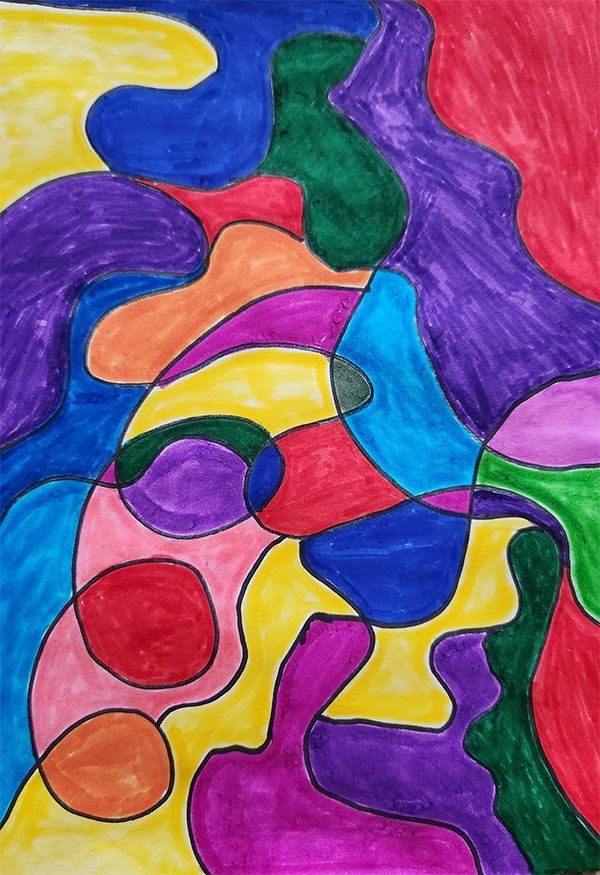
Neurographic art is one way that you may be able to integrate art into your personal healing
journey. In 2014, Russian psychologist, Pavel Piskarev, identified a drawing practice that can be
used to activate neurons and create new neural pathways.
Ramie Uren - Artist
If you feel the need to relax, to ease anxiety, and to engage in a process of self-discovery, give neurographic art a try.
A few basic instructions:
1. Find a piece of paper and a black pen or marker.
2. Using your pen or marker, start on one edge of the paper and begin to draw a curving
line as you cross the paper. Allow yourself to draw freely, creating loops, shapes, and
designs, while holding your marker on the paper. Avoid straight lines and sharp edges in
your drawing. Repeat this process a couple of more times, allowing your lines to
naturally cross over prior lines. The lines will naturally begin to intersect as you develop
your drawing.
3. Review your drawing for any sharp angles and begin to soften them by creating more
curve and softening the edges and angles on your drawing. If you feel the desire, create
additional lines and connections to tie the piece together.
4. Use whatever medium you prefer to begin to add color to your artwork. Experiment
with different mediums such as colored pencils, gel pens, markers, and watercolor
paints.
5. Follow your intuition when completing the drawing. If you feel inspired to do so, add
words to your drawing.
6. Once complete, reflect on the drawing, observe how you feel, and note any insight that
you may have gained during this process.